



If you’ve ever looked at our concentrates menu and felt like you needed a glossary, you’re not alone. The names, textures, and terminology can be a lot to sort through. But the core idea is simple: concentrates capture the best part of the plant and leave the rest behind. This guide breaks down what’s actually in a concentrate, how different types are made, and what that means when you’re standing at the counter trying to decide.
What Are Concentrates?
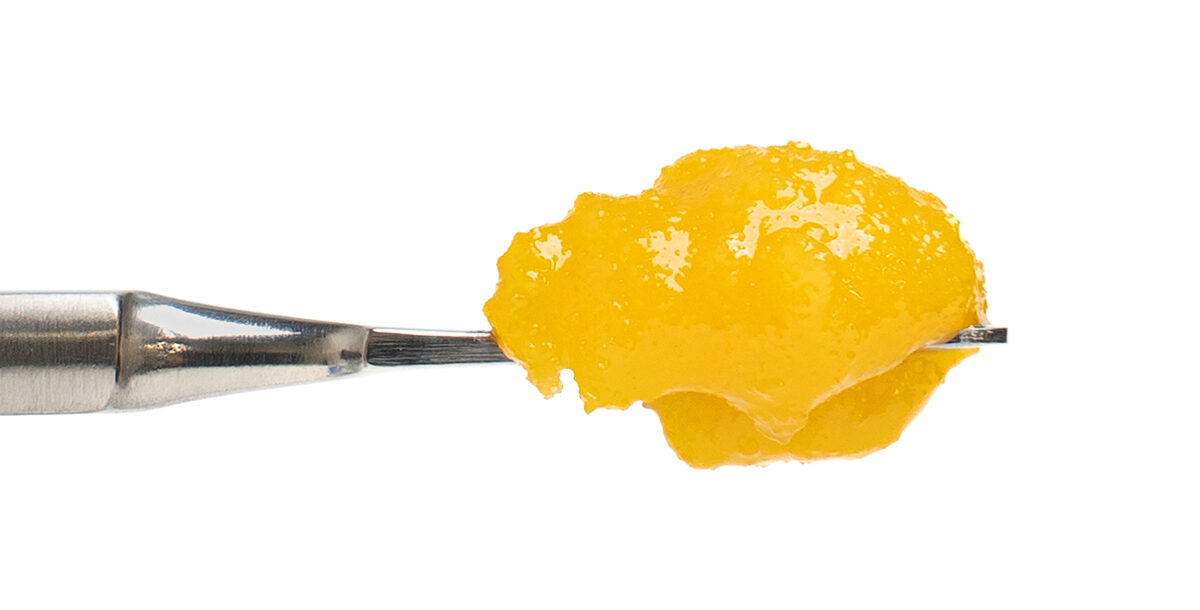
Cannabis concentrates are products made by separating cannabis resin from the rest of the plant. That resin contains the cannabinoids and terpenes responsible for aroma, flavor, and effects.
By focusing on the resin rather than consuming the entire flower, concentrates deliver a more condensed version of the plant’s chemistry. This allows for stronger flavor and effects in smaller amounts, without changing the fundamentals of how cannabis works.
Concentrates aren’t inherently stronger for the sake of it- they simply offer a different format, one that emphasizes efficiency and flavor.
What’s Being Extracted?

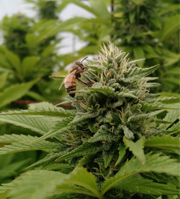
Mimosa grown in our greenhouse
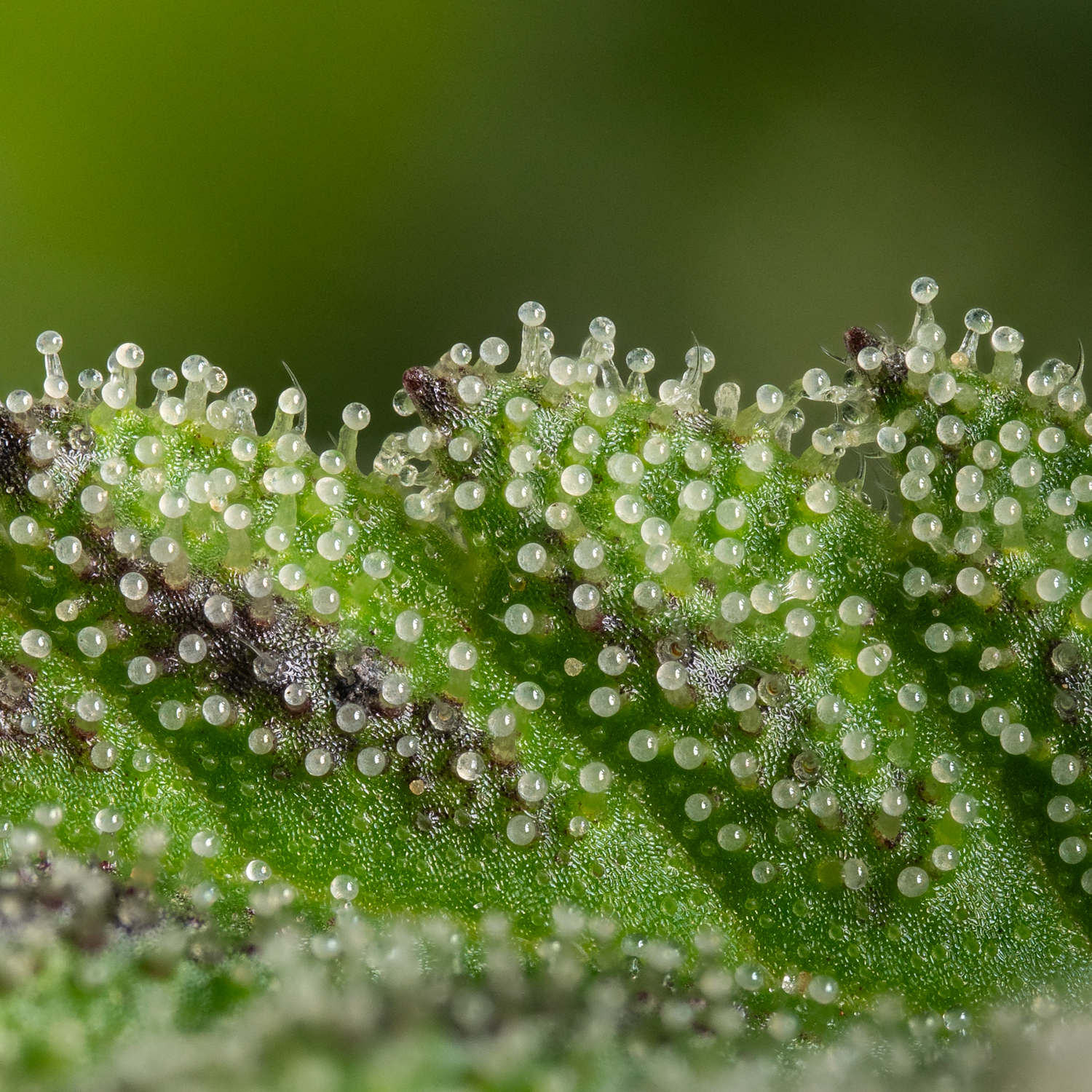
Macro photo of trichomes
Image courtesy of Upward Organics
Those crystal-like structures covering the plant are called trichomes- the resin glands where cannabinoids and terpenes are produced. Concentrates are designed to capture exactly that.
Across different methods, the goal is the same: separating trichomes from the rest of the plant and preserving the resin they contain. That resin is what gives cannabis its aroma, flavor, and effects.
How that separation happens is what divides concentrates into two categories: solventless and solvent-based.
Solventless Concentrates
Solventless concentrates use physical methods- such as water, agitation, pressure, and heat- to separate trichomes from plant material. No chemical solvents are used during the process.
Because these methods don’t rely on chemical solvents, the quality of the original flower plays a bigger role in how the final product smells, tastes, and feels.
Common solventless formats include kief, traditional hash, and rosin.
Solvent-Based Concentrates (Resin/BHO)
Solvent-based concentrates (often referred to as BHO, short for butane hash oil) use a temporary solvent to separate resin from the plant. That solvent is removed during processing, leaving behind cannabinoids and terpenes.
This approach allows for consistency, efficiency, and a wide range of finished textures.
Traditional Solventless Concentrates
Not all concentrates are modern or lab-focused. Some of the oldest concentrate styles rely on simple mechanical separation rather than extraction.
These products sit on the traditional end of the solventless spectrum and tend to feel more familiar to long-time cannabis consumers.
Kief
Kief consists of loose trichome heads that naturally separate from flower during handling and grinding. It’s one of the simplest forms of concentrate and has been around as long as people have been working with cannabis.
Because kief is closest to flower in both texture and use, it’s often an accessible entry point for people curious about concentrates without jumping straight into dabs.
Traditional Hash & Temple Balls
Traditional hash is made by collecting trichomes and gently pressing or working them into a solid, unified form. Temple balls are a classic example: dense, aromatic, and commonly broken into small portions for use.
Some modern temple balls are made using ice water bubble hash, a solventless method that separates trichomes from plant material using cold water and agitation. The collected hash is air-dried, cured, and then carefully hand-worked and rolled into a polished ball before additional curing.
Whether made through dry collection or ice water separation, this style of hash emphasizes careful handling and quality starting material. The result is a rich aroma and a more measured, traditional experience that can be enjoyed on its own or alongside flower.
Why These Still Matter
Traditional solventless concentrates highlight the idea that concentrates aren’t new, they’ve simply evolved. For some people, these formats offer a familiar bridge between flower and modern concentrates like rosin.

Chemon Tree Temple Ball
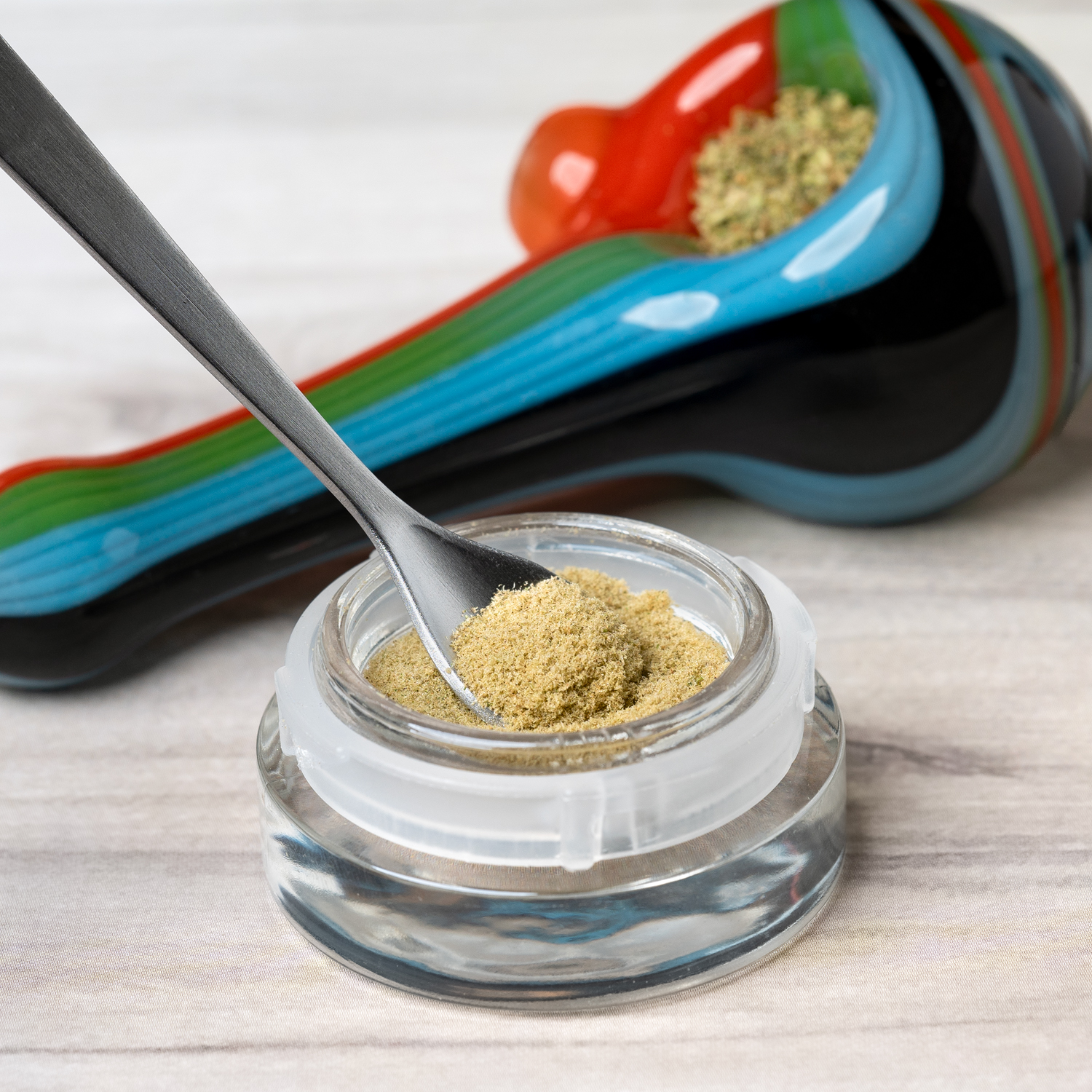
Kief is commonly sprinkled on bowls or joints as a topper.
Rosin
Rosin is a solventless concentrate made using water, heat, and pressure to separate and preserve cannabis resin. Instead of relying on chemical solvents, the process uses ice water to collect trichomes, which are then pressed into rosin.
Rosin is often made from fresh frozen cannabis. When you see the term “live rosin,” it simply means the plant was frozen shortly after harvest rather than dried and cured first. This helps preserve aromatic compounds and results in a more flavor-forward, strain-expressive concentrate.
Because rosin relies entirely on the quality of the plant and careful handling throughout the process, it is typically more labor-intensive to produce and often comes at a higher price point than solvent-based concentrates.
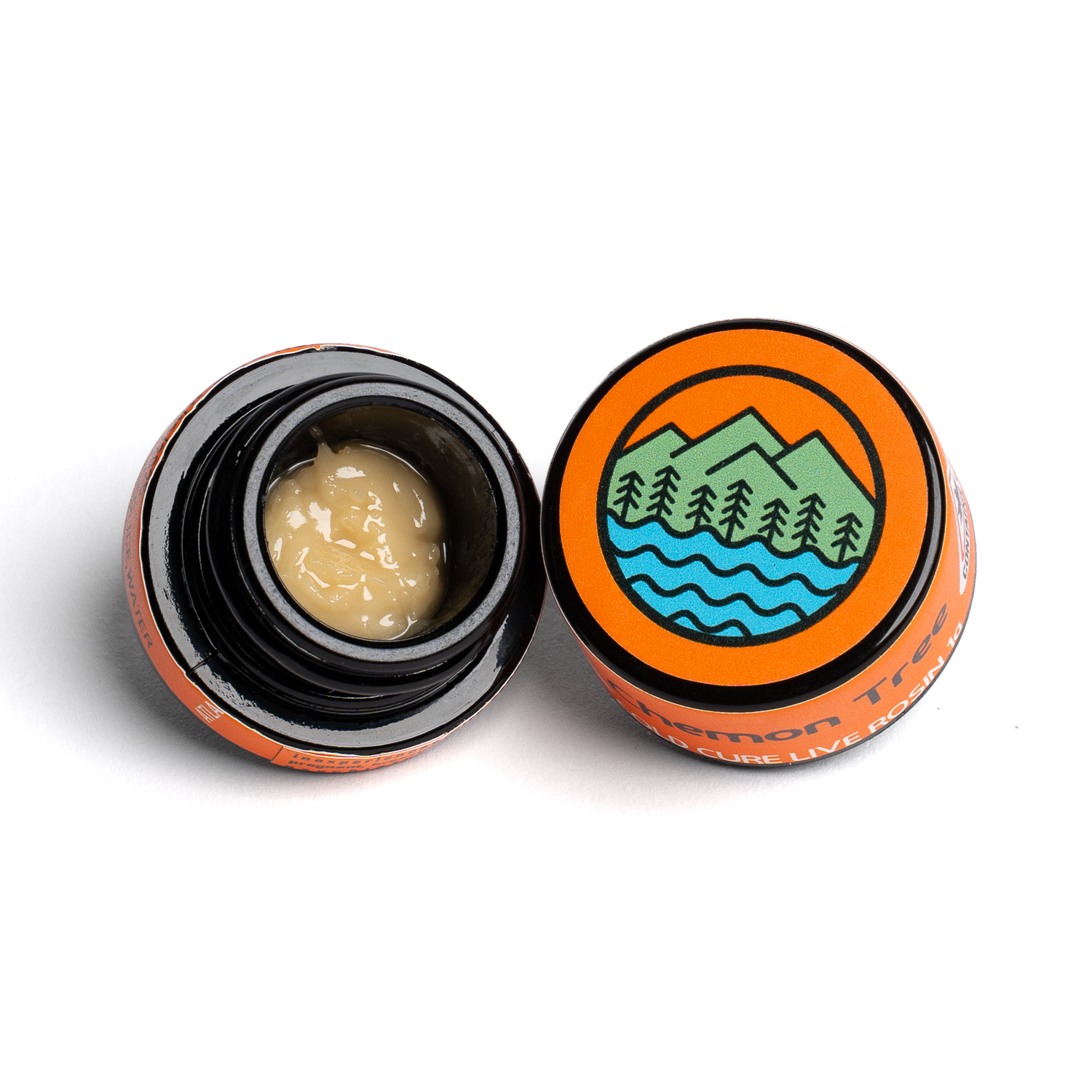
Our in-house Chemon Tree Live Rosin
Live & Cured Resin Concentrates
Resin concentrates are solvent-based products made by separating cannabis resin from plant material using a temporary solvent. This approach allows for efficient processing and results in concentrates that are widely available in a range of forms.
Like other concentrates, resin products are typically described as either live or cured, depending on when the plant is processed.
Live resin is made from fresh frozen cannabis and often emphasizes brighter aroma and fresher flavor, reflecting the plant closer to harvest.
Cured resin is made from dried and cured cannabis. As a result, its flavor profile tends to resemble dried flower more closely, rather than the brighter, fresher flavors often associated with live products made from fresh frozen plants.
In addition to live or cured input, resin concentrates are also defined by their texture. These differences affect how the concentrate is handled more than how it feels overall. Some common textures:
-
Badder / Batter – soft, creamy, and easy to work with
-
Sugar – grainy with a slightly wet appearance
-
Shatter – glassy and brittle when cold
For many consumers, resin concentrates offer a balance between strong effects, flavor, and accessibility, making them a popular everyday option.
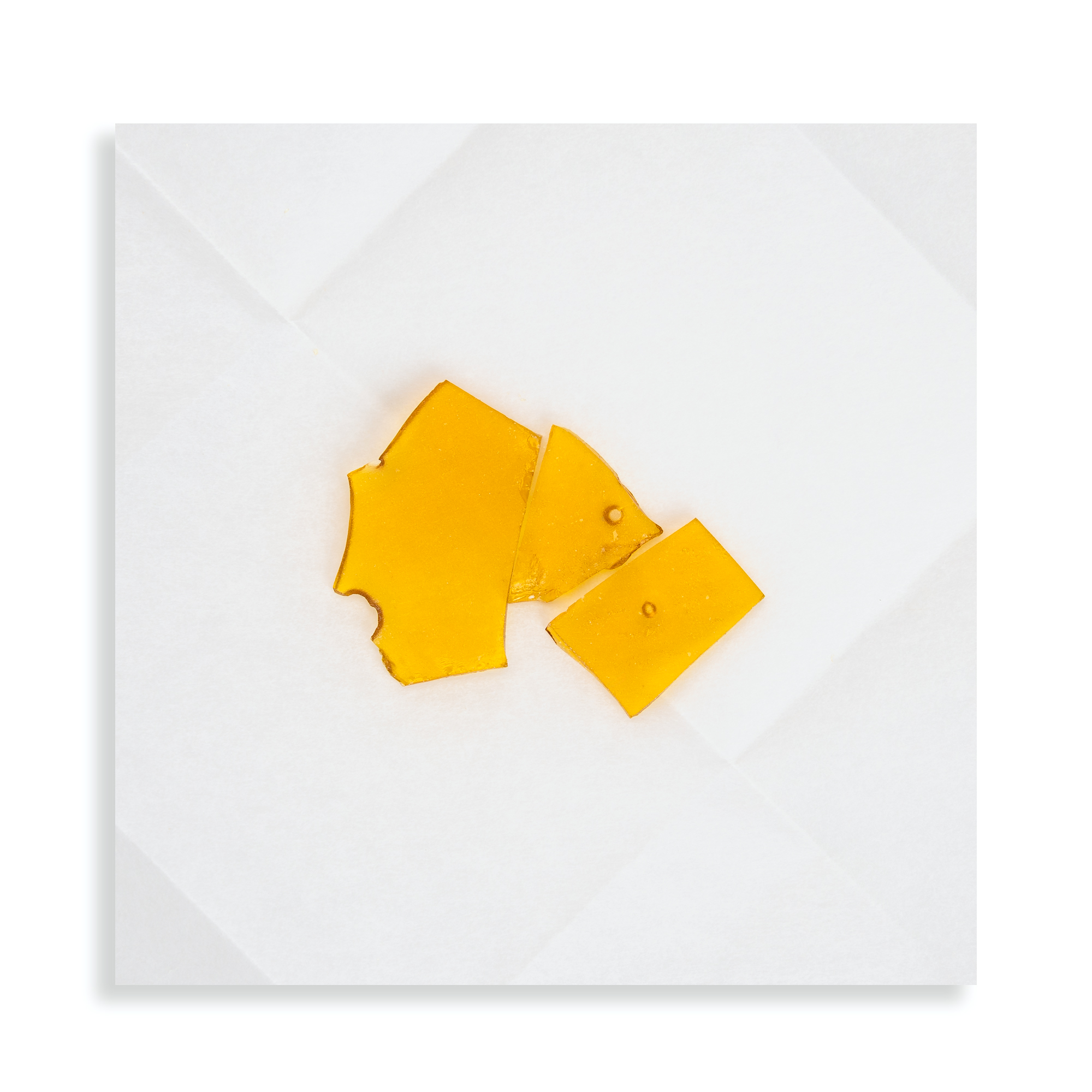
Shatter is often packaged in parchament paper
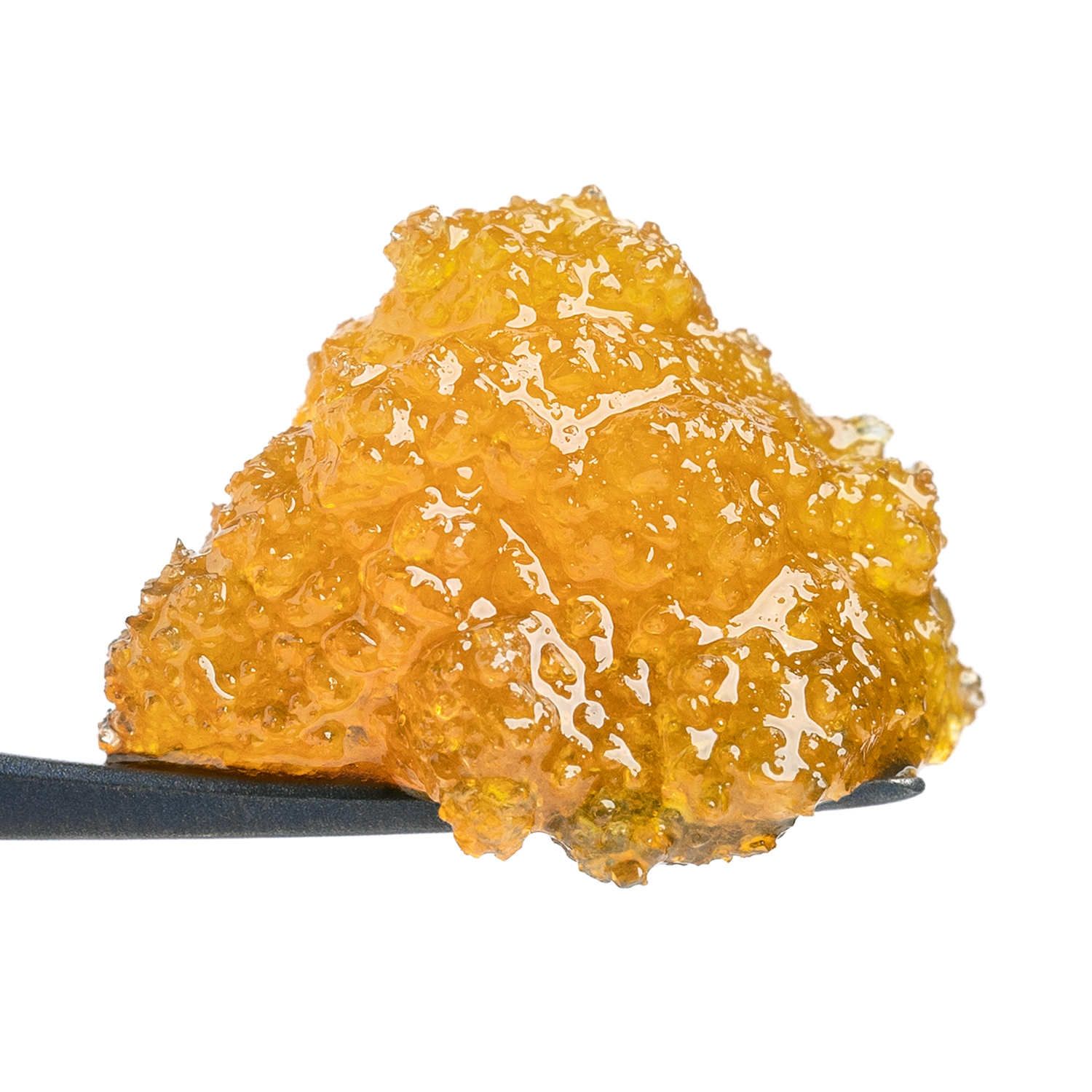
A scoop of Live Resin with
a wet “sugar” texture
Whether you’re just getting started or looking to try something new, our staff can help you find the right fit. Browse our current concentrate selection at any of our four locations- and if you have questions while you’re shopping, our budtenders are always happy to help!